Vicky Iovinella
Best Practices
AI Agents in Customer Experience: Why Enterprise CX Implementations Fail
AI in customer service doesn't fail loudly. It fails quietly through a confident wrong answer, a script that loops, a handoff with no context transferred. According to Zendesk's CX Trends 2026 report, 67% of consumers now expect more personalized service because AI can analyze their past interactions. The expectation has moved. The delivery, in too many cases, has not.
What sits in that gap is not random.
Behind each failure there is a recognizable pattern: a knowledge gap that wasn't caught before it reached the customer, a procedure that wasn't designed to handle exceptions, a system that didn't synchronize in time, a context that wasn't transferred at handoff. These failures are structural, not accidental, and their cost is concrete.
The same report found that 85% of CX leaders say a single unresolved issue is enough to lose a customer. Understanding exactly where and why AI agents fail isn't diagnostic work, but it's strategic.
And this kind of analysis is precisely what informs and refines the way Syllotips approaches enterprise AI agents improvement.
When Customer Context Breaks the AI Agent's Script in Customer Experience
AI agents handle simple, repetitive queries beautifully. Where’s my order, what are your opening hours, how do I reset my password. The moment a question carries nuance, emotional weight, or context that doesn’t fit a template, the script runs out.
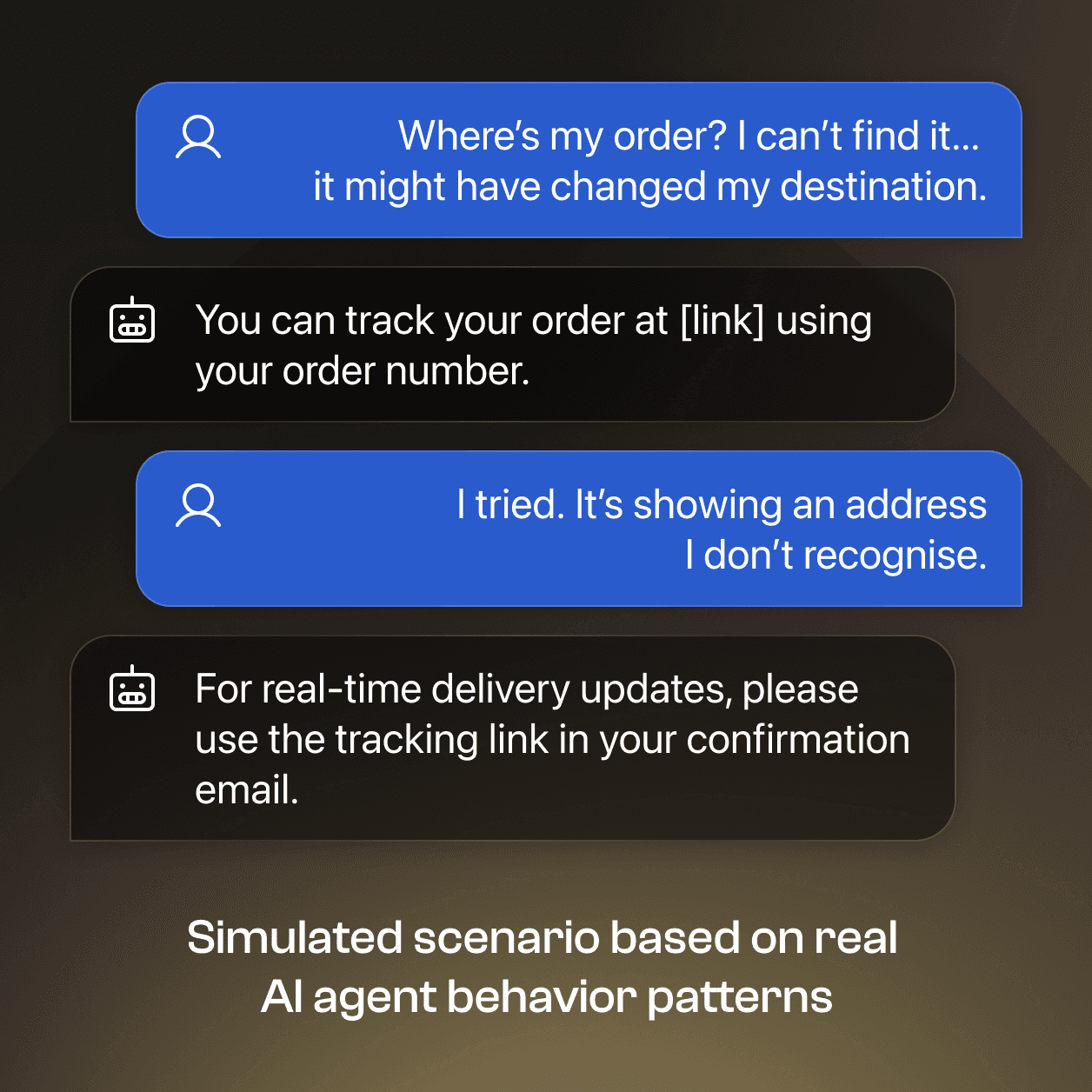
When the question has two layers, the AI agent heard only the first one. This is not a bug, it is how language models are built. They process the most statistically likely interpretation of a query, which means the explicit layer ("where is my order") almost always wins over the implicit one ("something may have gone wrong"). In customer care, the implicit layer is often the one that matters most. And without the right knowledge to answer it, the agent defaults to what it has: a link, a procedure, a redirect.
AI Agent Hallucinations: Why Generative Customer Service AI Fails
AI agents can generate answers that sound authoritative and specific but are entirely invented. In customer care, this means a customer can walk away with instructions that don’t exist, policies that were made up, or product features that were never built.
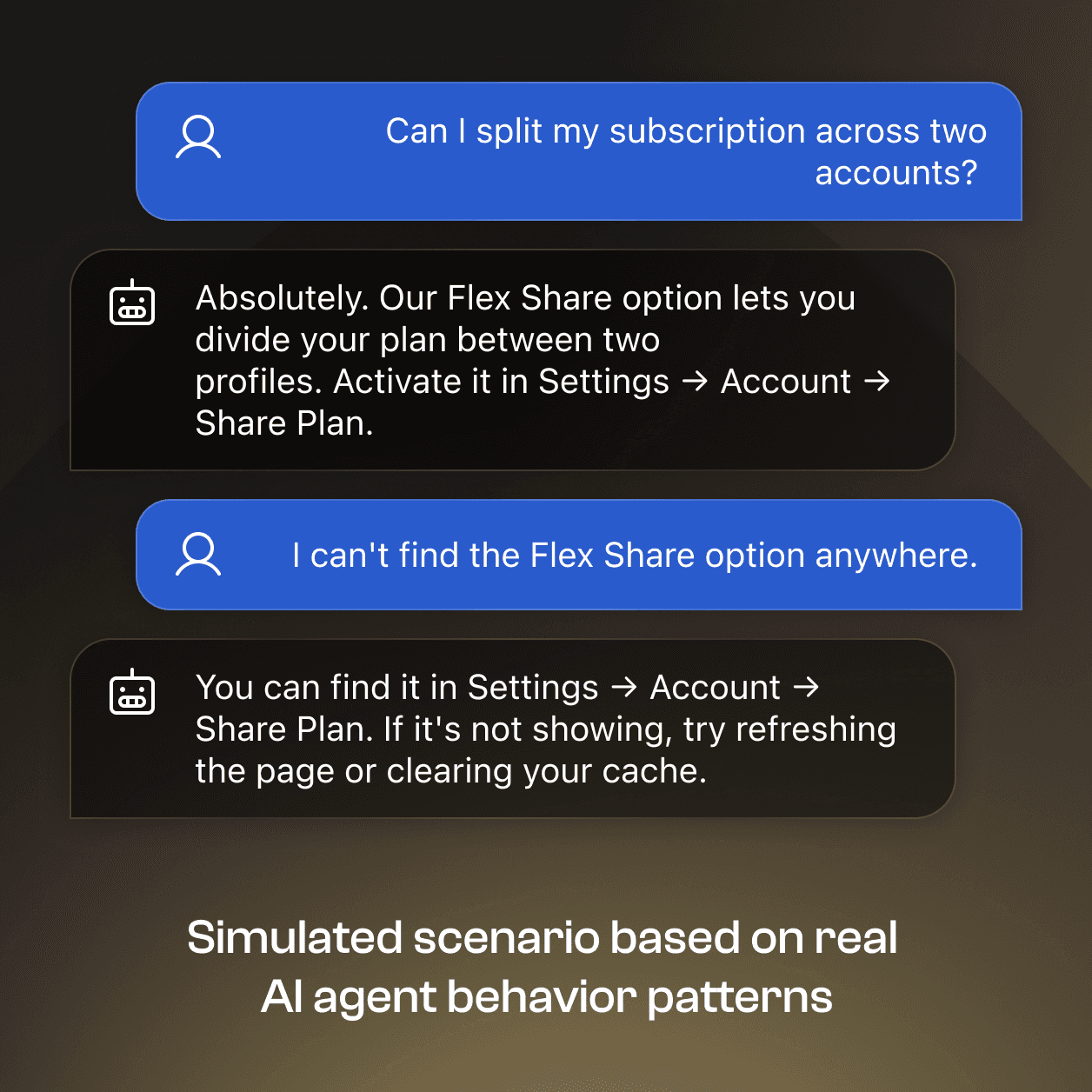
The truth is that there is no Flex Share option. The menu doesn't exist. The instruction was generated with complete confidence because the agent had no mechanism to recognize the boundaries of its own knowledge and defaulted to generating the most plausible sounding answer it could construct. In customer care, plausible and accurate are not the same thing. And a customer who follows invented instructions doesn't just fail to solve their problem. They lose trust in the brand before they even reach a human.
“The failures aren’t random. They follow patterns. And patterns are exactly what a Continuous Improvement Layer is built to detect and correct.”
Rigid Workflows: Overcoming CX Automation Loops with Human-in-the-Loop
Standard AI agents tend to follow a configured script until it ends, and then they follow it again, entering a loop. Those operating within a Human-in-the-Loop framework, however, can be corrected when a standard procedure doesn't fit. They recognize when a situation requires a different path and adjust.
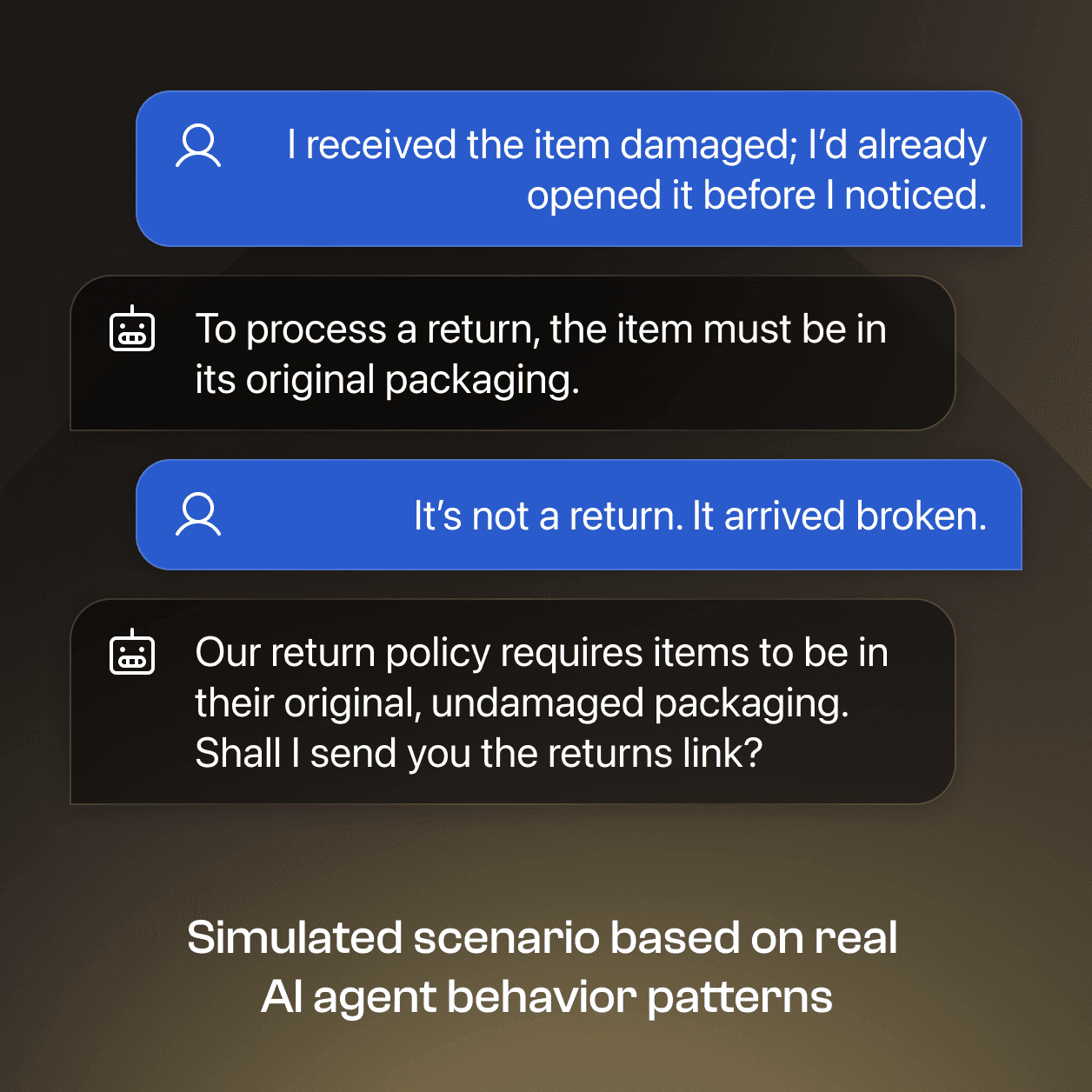
These agents are trained to resolve based on static patterns, not to reinterpret. When a request doesn't match the expected template, like a damaged item vs. a standard return, the agent maps it to the closest known procedure and executes it, regardless of the actual fit.
Breaking this cycle requires a continuous improvement layer that allows the system to adjust dynamically rather than repeating the same error. Judgment isn't configured once; it is built through ongoing optimization.
Data Latency in AI Customer Service: The Risk of Outdated Systems
Integrating AI with legacy CRMs, billing systems, and logistics platforms is technically complex. When synchronization fails or delays occur, the AI agent presents outdated information as fact and tells the customer they’re wrong.
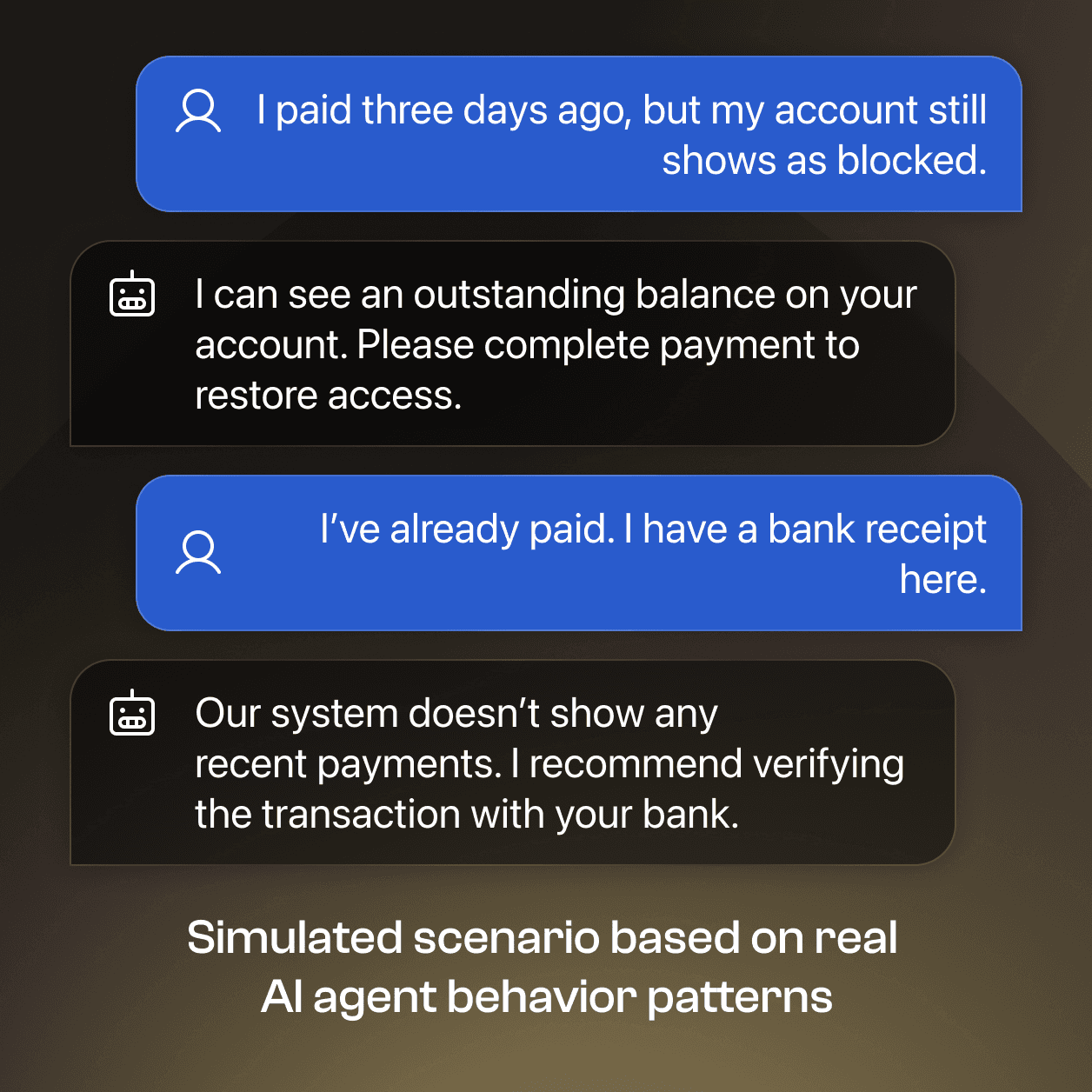
The customer's bank confirmed the transfer. The AI's system hadn't caught up. The customer was told, politely, that they were wrong. In real-time customer care, data latency is not a technical footnote; it is the conversation.
Data Latency
In AI-powered customer service, data latency is the delay between a real-world event, a payment processed, an order updated, a status changed, and the moment that change becomes visible to the AI agent. Unlike response latency, which measures how fast the system replies, data latency measures how current the information behind that reply actually is. An agent can respond instantly and still be wrong.
The Broken Handoff: Missing Context from AI Agents to Customer Service Reps
The handoff from AI agent to human agent is the moment that defines whether the whole conversation was worth it. If the context doesn’t transfer, the customer pays the price twice.
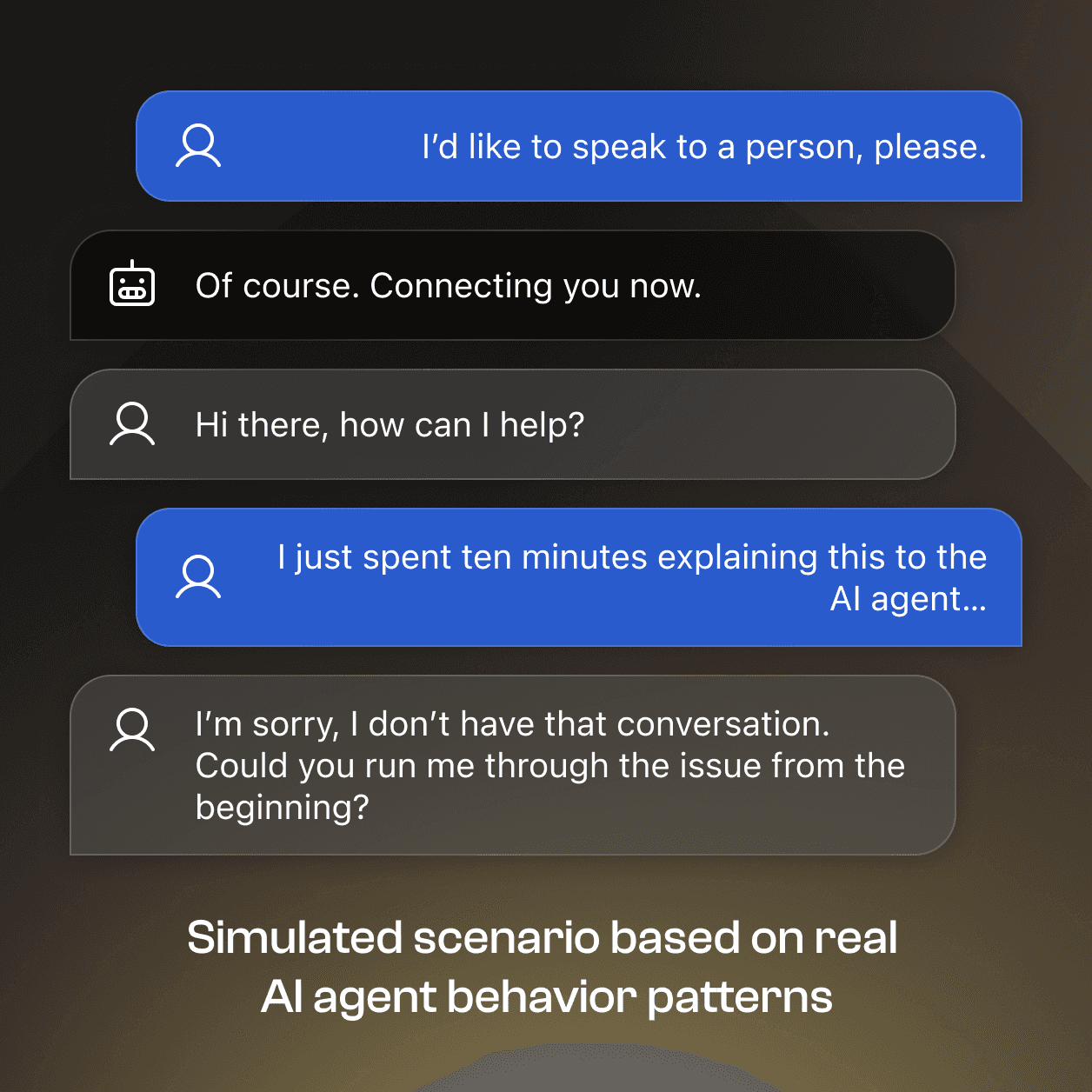
This is one of the most consistent sources of customer frustration in AI-powered support. Yet it remains one of the most common experiences. Passing that context to a human agent requires an explicit integration between the AI layer and the ticketing or CRM system. Without it, the handoff is clean on the interface and empty underneath.
AI Governance & Compliance: Managing Sensitive Data in AI Interactions
Customer care handles sensitive data every day: payment details, personal information, account credentials. An AI agent that collects this data without proper safeguards, verification, or transparency isn’t just a bad experience. It’s a liability.
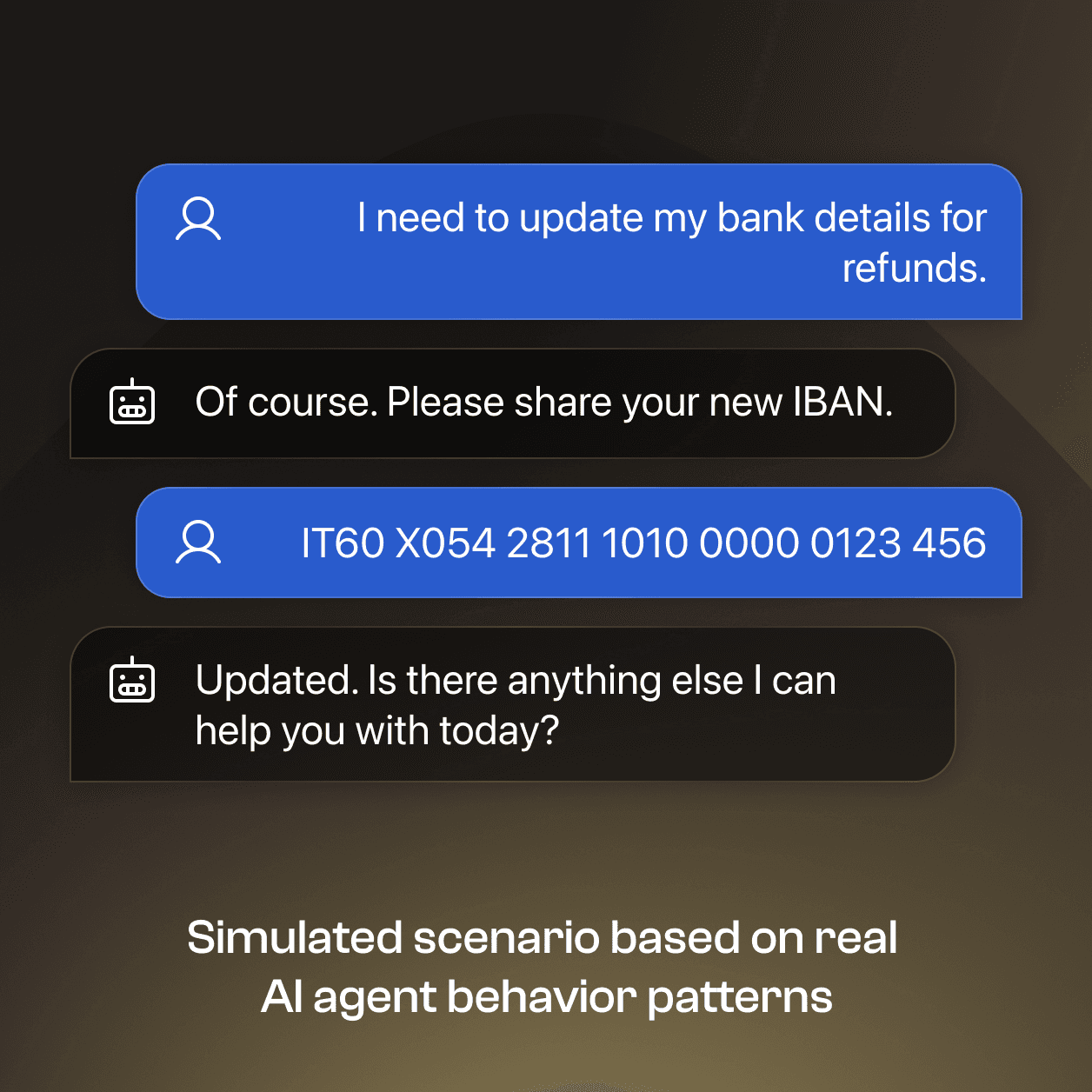
No identity verification. No mention of how the data would be stored or processed. No secure channel. A sensitive financial detail, collected in a standard chat window. An AI agent that handles this without governance in place isn't just creating a poor experience; it's creating a compliance risk.
“Every one of these conversations is a gap. Every gap is an opportunity to learn, to correct, and to make sure it never happens the same way again.”
How a Continuous Improvement Layer Keeps AI Failures from Repeating
The six failures above share a common structure: a gap in the knowledge base, a rigid procedure, a missing system context, an unsecured input. What they also share is that none of them were logged, flagged, or corrected. In most AI-powered customer care deployments, the failure just happens again.
Syllotips addresses these AI CX challenges at the procedural level by introducing a Continuous Improvement Layer. Answers are grounded in your knowledge management systems, historical tickets, and operating procedures before they reach the customer. Reliability is scored automatically; anything below threshold goes to a Subject Matter Expert for review before it enters the conversation. When the system can't respond with confidence, it collects the missing information before escalating, so the human agent receives full context and a case history summary rather than a blank screen.
Routing follows intent: complaints, returns, and billing queries travel different paths, handled by the right workflows. CRM and billing context are pre-fetched before the AI responds, so the answer reflects the actual state of the account. And where compliance thresholds apply, sensitive data, financial details, identity-sensitive requests, the right workflow triggers automatically, without relying on the AI agent's in-the-moment judgment.
Customer Experience
AI CX
Customer Service AI
AI Agents
Human-in-the-loop
Continuous Improvement Layer
Enterprise AI
CX Automation
AI Governance
Knowledge Management
Vicky Iovinella
Writer
Ready to gather your experts’ know-how?
See how Syllotips can help your team deliver expert-level support at scale.